

For career changers
Build a career-change resume that translates.
Reframe transferable skills, score them against your target field, and practice the interviews you have not had before.
Contact Information
Link icons are detected automatically. Use Website for GitLab, Codeberg, Bitbucket, a portfolio, or another profile.
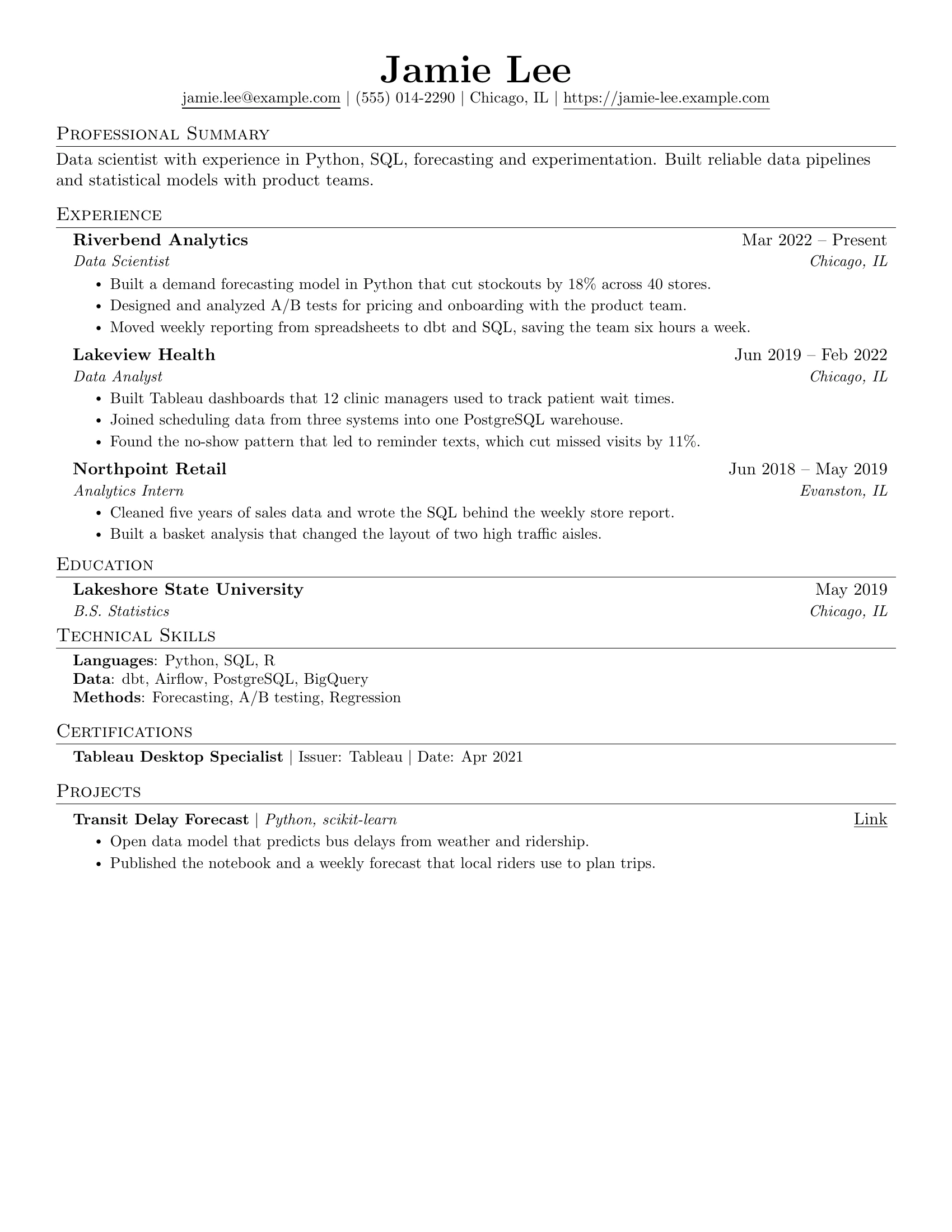
Translate the experience you already have
A career-change resume often describes your old work in your old industry’s language. Human and software screeners in the new field cannot see the overlap, even when the skills are there.
Start with the work you have already done. Rebuild around transferable skills, compare the resume with a target posting, and rehearse questions from that same role.
How it works
Four steps into the new industry
- 01
Rebuild around transferable skills
Keep one source resume and create role-specific versions for the new field without losing the original. Export every version as a typeset PDF.
- 02
Score against real postings
Compare a target posting with your resume and see matched and missing skills before you apply.
Read the published method - 03
Track the transition pipeline
Keep roles in one tracker, with contacts, linked resumes, notes, and the shipped Saved, Applied, Screen, Interviewing, Offer, and Rejected statuses attached to each record.
- 04
Practice unfamiliar interviews
Build practice from the actual job description. Browser voice needs compatible speech APIs, microphone permission, and a configured AI provider.
Use one reviewed resume per target role
Each target role can have its own scored resume version, with matched and missing skills visible before you apply.
The application record keeps that resume, the role status, and your manual follow-up note together. Practice questions come from the job description you choose.
Do not fill a gap with a fake claim
A missing skill is a gap to inspect, not a keyword to fake. HireReset will never coach you to invent experience, and no score predicts an employer’s decision.
Voice and MCP have separate limits
Voice practice is not reserved for a paid plan: the browser and bring-your-own-key paths depend on your browser and provider. Hosted verbatim transcription has a separate paid-plan gate. The MCP server is live and needs a Pro or Plus plan. See the pricing page for the current plan terms.
See pricingCapabilities and limits
Translate existing evidence without inventing experience
The workflow helps you reorganize evidence for a new field while keeping every claim under your control.
Available today
- Create a role-specific working resume and export it in one of 30 typeset layouts.
- Compare resume text with a real posting and review matched and missing skills using the published deterministic method.
- Track the transition with Saved, Applied, Screen, Interviewing, Offer, and Rejected statuses.
- Use browser voice practice when a compatible browser, microphone permission, and configured AI provider are available.
Limits to know
- A fit score describes text alignment; no score predicts an employer decision, interview, or offer.
- HireReset does not verify that a claimed skill or experience is true. You must review every resume statement.
- The tracker records manual follow-up details but does not send follow-up messages or calendar invitations.
- Browser speech recognition and synthesis are not available in every browser.
Start with evidence you already earned
Build a working resume, compare it with one real posting, and decide what needs explanation or development.